
We don't do visibility.
We do retrieval.
RAG Signal was founded by Bora Kurum to treat AI presence as a structured retrieval problem. We don't do vague visibility. We do Adaptive RAG and Signal Weighting.
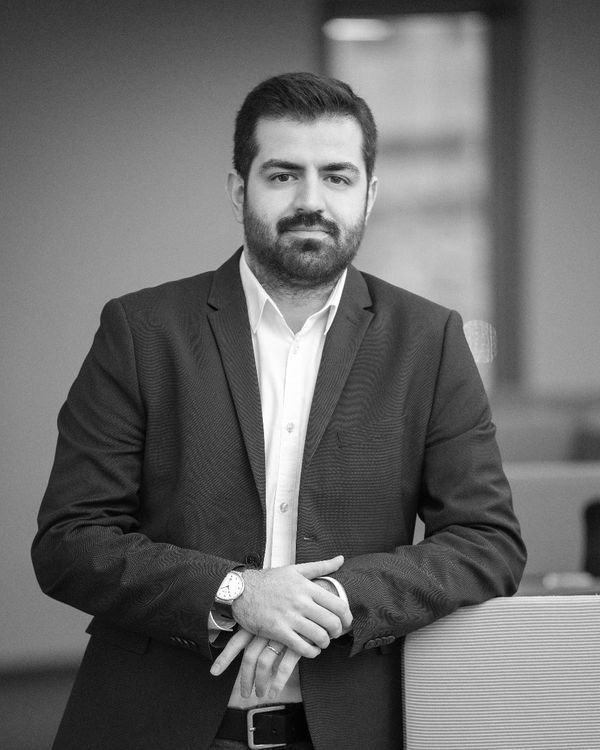
"Most agencies sell promises. We published the methodology. The Adaptive RAG whitepaper is open source — not because we're generous, but because the math speaks for itself. Multi-source weighting, temporal freshness scoring, hybrid ranking. Read it. Audit it. That's the difference between marketing and engineering."
— Bora Kurum, Founder
Why I Published the Whitepaper
The GEO/AEO space is full of black boxes. Agencies sell "AI visibility" without showing how it works. I wanted to change that. The RAG Signal Adaptive RAG Architecture paper documents every component of our system — the djb2 hashing, the freshness function, the composite scoring formula. It's peer-reviewable. It's Apache 2.0. It's the opposite of a black box.
Read the paper →Why RAG Signal Exists
In 2024, a fundamental shift became visible: B2B buyers stopped searching and started asking. ChatGPT, Claude, Perplexity — users were getting answers without ever visiting a website. The unit of digital visibility changed from the click to the citation.
Traditional SEO was optimizing for the wrong retrieval system. Google's PageRank and an LLM's vector space operate on fundamentally different mechanics. Brands dominating Google were invisible in AI. Brands with structured entity data but weak backlinks were getting cited. The gap was structural, not cosmetic.
RAG Signal was founded to close this gap — not with another content tool, not with "prompt engineering," but with a structured, repeatable engineering methodology: Adaptive RAG. We treat brand presence as a data engineering problem. We build Brand Memory, weight retrieval signals, and deploy across all major AI models so your brand becomes the cited answer — not the invisible alternative.
Why RAG?
Retrieval-Augmented Generation is the technical mechanism that powers AI answers. When a user asks a question, the model doesn't "know" the answer — it retrieves relevant information from its knowledge base, then generates a response. If your brand isn't in that retrieved set, it cannot appear in the answer.
Our name starts with the core technology we engineer. We don't write content hoping AI notices. We work directly in the retrieval layer — the place where AI models actually look for facts before they speak.
Why Signal?
In information theory, a signal is structured data transmitted through a channel, distinct from noise. AI models swim in an ocean of undifferentiated content — most of it is noise. A brand that gets cited emits a clear, consistent, machine-readable signal.
Our job is to amplify your signal — to make your brand's entity data so structured, so consistent, and so well-weighted that AI retrieval systems treat it as ground truth. Not noise. Signal.
Our Methodology
RAG Signal uses Adaptive RAG — a 5-phase engineering process (MAP → BUILD → WEIGHT → REINFORCE → MEASURE) that treats brand visibility as a retrieval problem rather than a ranking problem. Unlike standard RAG, Adaptive RAG continuously adjusts to model updates and competitive changes. The core evaluation engine is the Signal Scoring Engine (the 7-dimension RAG Scoring Algorithm):
- Source Authority — 25%
- How trustworthy the model considers your sources: publication quality, domain authority, and citation history in the model's training data.
- Factual Consistency — 20%
- Whether your claims are internally consistent and corroborated across independent sources — the strongest antidote to hallucination.
- Entity Linkage — 15%
- How densely your content defines and connects named entities (your brand, products, people, competitors) in machine-readable structure.
- Cross-Model Persistence — 12%
- Whether your brand is cited consistently for the same prompt across ChatGPT, Claude, Perplexity, and Gemini. Low persistence means model-dependent retrieval.
- Temporal Freshness — 12%
- Recency of your content relative to the query. Fresh, dated, updated content signals that your brand is current — stale content decays in retrieval ranking.
- Citation Frequency — 10%
- How often your brand is referenced across the open web and in model training corpora. Frequency compounds: each citation makes the next retrieval more likely.
- Competitive Diff — 6%
- How clearly your brand is differentiated from competitors in the same prompt landscape — models prefer sources that answer the question specifically.
How Signal Weighting Works
Signal Weighting is the third phase of Adaptive RAG. After mapping your prompt landscape (MAP) and constructing your Brand Memory (BUILD), we score every brand signal across the 7 dimensions above. The weights are not static — they are re-calibrated per model and per prompt cluster, because ChatGPT's retrieval behavior differs from Gemini's. What earns a citation on one platform may be invisible on another; Signal Weighting is what makes your brand retrievable everywhere, not just somewhere.
Adaptive RAG vs. Traditional SEO
Traditional SEO optimizes for PageRank: links, keywords, and SERP position. Adaptive RAG optimizes for retrieval: entity structure, source trust, and citation probability inside an LLM's vector space. Google ranks pages; AI models cite sources. A brand can rank #1 on Google and be completely absent from ChatGPT's answer — because the two systems evaluate entirely different signals. Our methodology is built for the retrieval layer, and it is published, peer-reviewable, and open source under Apache 2.0.
Company Values
Engineering Over Marketing
We build systems, not narratives. 40+ platform modules.
Measurable, Not Vague
Citation Rate, Citation Delta, Cross-Model Persistence.
Performance-Linked
We only get paid in full when you get cited.
Founder-Led
Every engagement involves Bora directly. No handoffs.
Model-Agnostic
Your Brand Memory deploys across all AI models.
Work With Us
Every engagement starts with a conversation. Bora responds personally within 24 hours.
Kozyatagi Mah., Kaya Sultan Sok., Hayriye Is Merkezi No:83/3, Kadikoy, Istanbul, TR
Get Your Citation Baseline →